

Hey there, travel lovers! 🌸
Have you ever wanted to escape the crowded cherry blossom festivals and find a spring destination in Korea that feels genuinely special?
Well, let me tell you a secret — Chungcheongnam-do (Chungnam) along Korea's West Sea coast is exactly that place!
While everyone else is fighting for space at Jinhae or Yeouido, Chungnam quietly puts on one of the most stunning spring shows in the entire country. We're talking about a century-old Korean hanok house surrounded by 3 million daffodils, a tidal Buddhist hermitage that floats on the sea twice a day, a massive natural sand desert that looks nothing like Korea, and a legendary West Sea sunset that will stop you in your tracks.
And the best part? You can experience ALL of this in a single day's drive from Seoul! 🚗
In this guide, I'll cover everything you need for the perfect Chungnam spring trip in March 2026 — top spots, insider tips, food recommendations, transportation options, and ready-to-use itineraries.
Ready? Let's go! 🌊
(The images in this post are AI-generated and may differ from the actual scene. Please use them for reference only.)


1. Why Chungnam Should Be on Your Spring Korea Bucket List
1) Spring Comes Early Here
Korea's spring season typically sweeps up from the south, but Chungnam's West Sea coastline gets a head start thanks to its maritime climate. The Seosan and Taean areas start seeing daffodils bloom from mid-March — weeks before the famous cherry blossom season peaks in Seoul.
This means that in late March, you can actually enjoy two completely different spring experiences on the same trip: the daffodils are at their peak while the cherry blossoms are just starting to appear further inland. Timing your trip right gives you the best of both worlds!
2) 2026 Is the Best Year to Visit
Here's another reason to go now: 2025-2026 is officially the Visit Chungnam Year! The provincial government has rolled out special travel perks, discount accommodation programs, and a packed calendar of festivals and events. If you're planning a spring Korea trip, this is genuinely one of the best times to make Chungnam your destination.
3) Best Timing at a Glance
| Ganworam Temple | March~April (spring recommended) | Check tide schedule before going! |
| Yugibang Daffodil Festival | Late March ~ Early April | Festival: Mar 20 ~ Apr 19, 2026 |
| Sinduri Sand Dunes | March (clearest visibility) | Free entry, year-round |
| Kkotji Beach Sunset | Year-round / Spring especially lovely | Sunset around 6:30 PM in March |
| Chollipo Magnolia Festival | Mar 27 ~ Apr 19, 2026 | 926 varieties of magnolia! |
Sweet spot tip: If you want to catch the daffodil peak AND the magnolia festival, plan your trip between March 27th and April 2nd. That's the golden window! 🎯


2. The Complete Chungnam Spring Travel Itinerary
1) One-Day Trip from Seoul
This is totally doable! Here's a smooth one-day flow:
9:00 AM — Leave Seoul via Seohaean Expressway
11:00 AM — Ganworam Temple (tidal hermitage — check the tide schedule the night before!)
1:00 PM — Lunch at Samgilpo Port (fresh spring nakji octopus is a MUST here 🐙)
3:00 PM — Yugibang Hanok House daffodil fields
5:00 PM — Sinduri Coastal Sand Dunes walk
6:30 PM — Kkotji Beach for the sunset
8:30 PM — Drive back to Seoul
Total distance is around 250km and takes about 10~11 hours including stops. Tight, but absolutely worth every minute!
2) 1 Night 2 Days (Highly Recommended!)
Honestly, if you can swing it, the overnight version is SO much better. Here's why — you get to watch both the sunset AND sunrise at Kkotji Beach, and the whole trip just feels less rushed.
Day 1:
Start the morning at Ganworam Temple with the calm spring sea all around you → Grab a seafood lunch at Samgilpo Port → Head to Yugibang Hanok House for the daffodil fields (go on a weekday if possible!) → If it's late March, swing by Munsusa Temple for the double cherry blossoms → End the day watching the legendary Kkotji Beach sunset → Check into a cozy pension on Anmyeondo Island for the night 🌙
Day 2:
Wake up early for sunrise at Kkotji Beach (trust me, it's worth the early alarm!) → Grab breakfast at Anmyeondo Fish Market → Explore Sinduri Coastal Sand Dunes → Visit Chollipo Arboretum for the Magnolia Festival if you're there after March 27 → Stroll along Mallipo Beach → Start the drive back home feeling completely recharged ☀️


3. Spot-by-Spot Travel Guide
1) Ganworam Temple — The Temple That Floats on the Sea
① What Makes It So Special
I genuinely think Ganworam is one of the most unique places in all of Korea — and not enough people know about it!
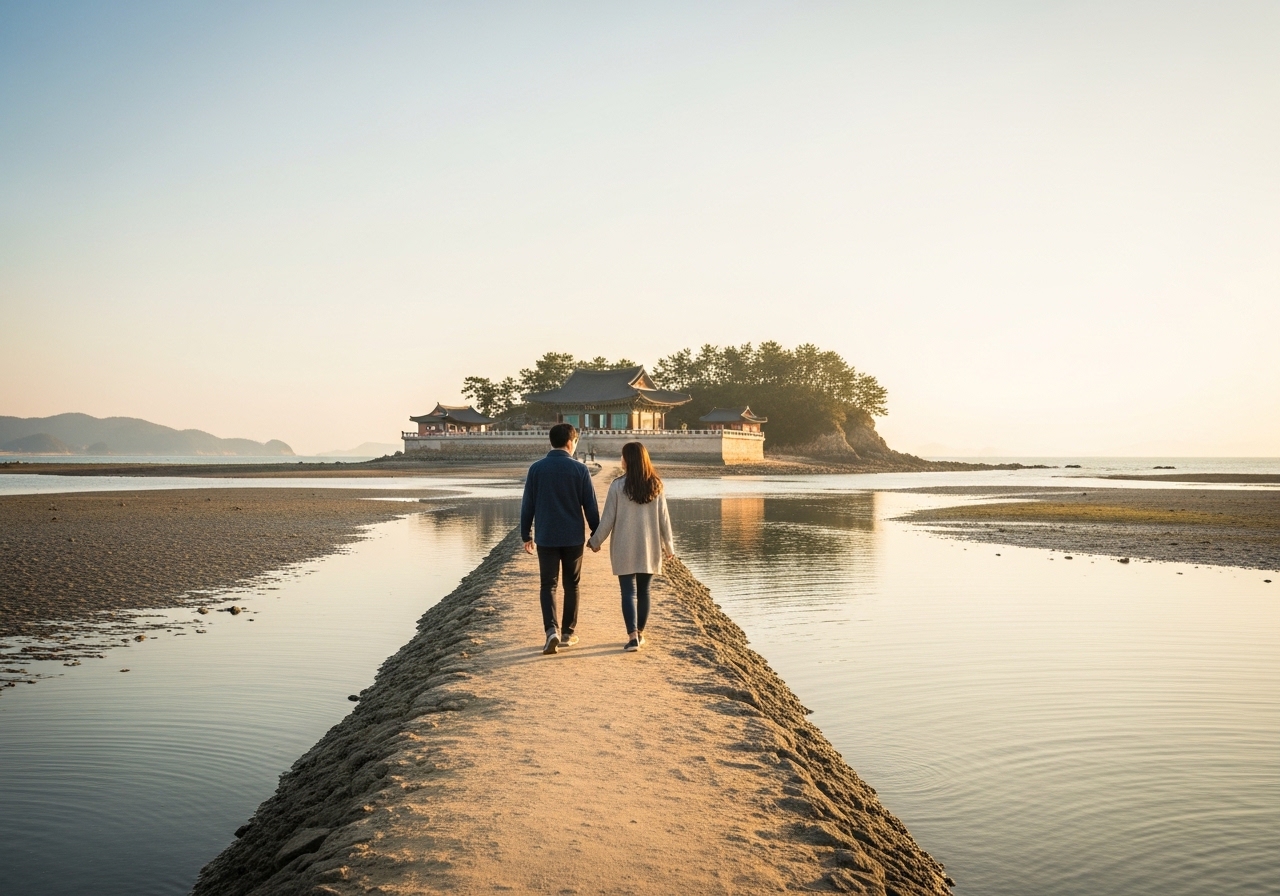
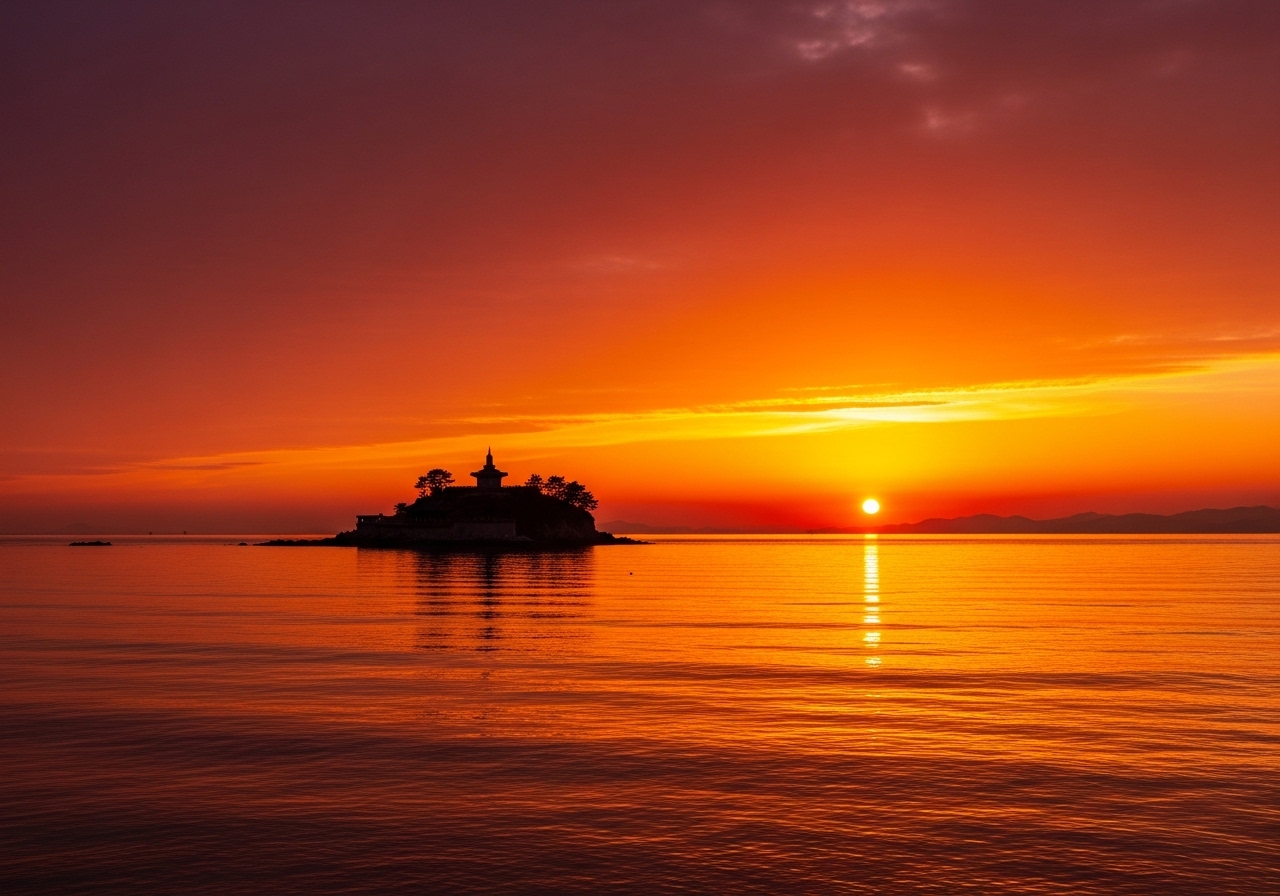
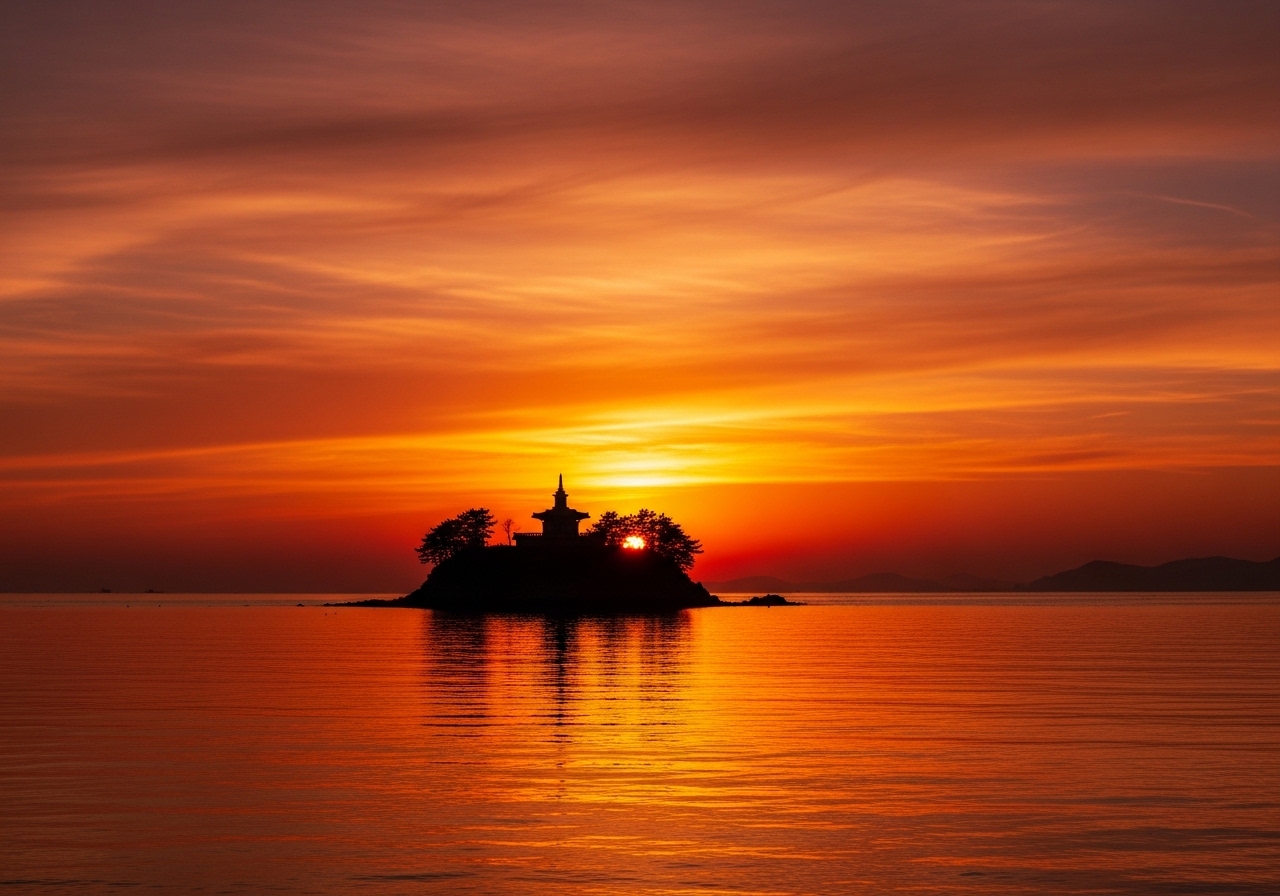
This small Buddhist hermitage sits on a tiny rocky island just off the coast of Seosan. Twice a day, when the tide goes out, a path opens up and you can walk right out to the temple. When the tide comes in, the path disappears and the temple becomes a floating island surrounded by sea.
The hermitage was founded by the Buddhist monk Muhak Daesa during the late Goryeo period, who reportedly reached enlightenment here while watching the moon. The name "Ganwol" literally means "watching the moon" in Korean — pretty poetic, right? ✨
The temple went through a period of abandonment during the Joseon Dynasty's anti-Buddhist policies, but was rebuilt in 1941 by the revered monk Mangong Seonsa. Today it stands as one of Korea's most photographed coastal spots — and once you see it in person, you'll immediately understand why.
② Planning Your Visit — The Tide is Everything
Here's the most important thing to know: you MUST check the tide schedule before visiting!
If you arrive at high tide, the path is underwater and you cannot enter — you'll just have to admire the temple from the shore (which is also beautiful, honestly). If you arrive at low tide, you can walk the path and explore inside.
The Ganworam official website posts daily tide schedules, so make sure to look it up the evening before and plan your arrival time accordingly. Also keep in mind that entry is not allowed after sunset.
③ Spring Photography Tips
March at Ganworam is genuinely stunning. The soft spring light hitting the West Sea surface creates this dreamy, gentle atmosphere that's completely different from summer or autumn.
The best photo spot is actually from a distance — standing on the seawall to the left of the entrance gives you a wide shot of the entire hermitage floating against the open sea. Late afternoon around 4~5 PM is golden hour here, and if you time it right you can catch the sunset from behind the temple for some truly dramatic shots! 📸
④ Practical Info
- Address: 119-29 Ganwoldo 1-gil, Bueok-myeon, Seosan-si, Chungcheongnam-do
- Hours: Daily 05:00~19:00 (varies by tide)
- Admission: Free / Parking: Free
- Must do: Check tide schedule at Ganworam official website before visiting
⑤ Where to Eat Nearby
Right next to Ganworam is Ganwol Port, where you'll find a row of seafood restaurants serving the freshest West Sea catches. Spring is prime season for nakji (octopus), gul (oysters), and kkotge (flower crab). The restaurant Keunmaeul Yeongnyang Gulbap near the temple entrance is a local favorite known for their oyster rice set meals — simple but absolutely delicious! 🦪

2) Yugibang Hanok House — 3 Million Daffodils Behind a 100-Year-Old Home
① A Living Cultural Heritage Site
This place genuinely surprised me when I first visited. It's not a public park or a government-run garden — it's a privately owned traditional Korean hanok (wooden house) that's been in the same family for over 100 years!
Built in 1919 during the Japanese colonial period, the Yugibang Hanok House is designated as Chungcheongnam-do Folk Cultural Heritage. What makes it extraordinary is that the family still lives here — it's a real home, not a museum. That private, intimate atmosphere is something you just can't replicate in a public park.
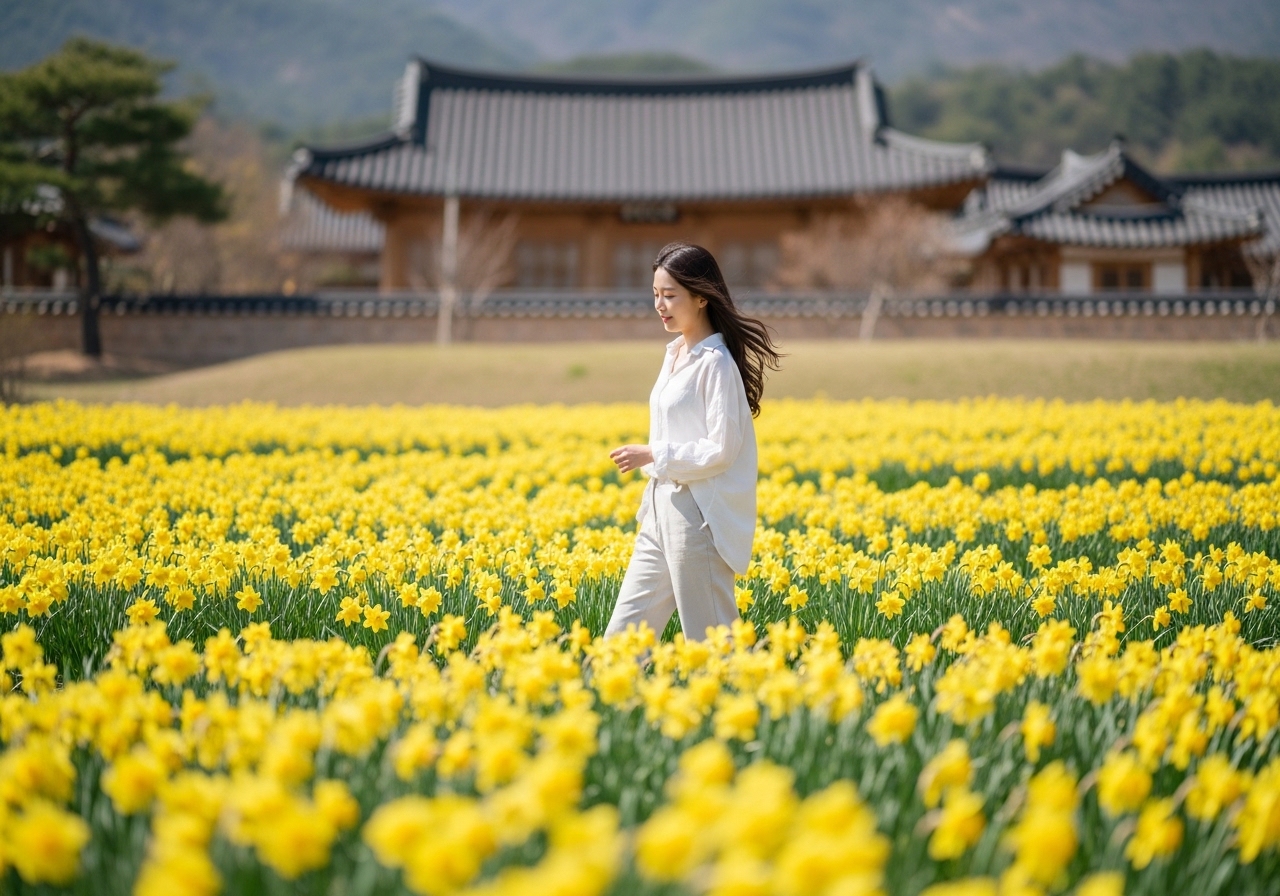
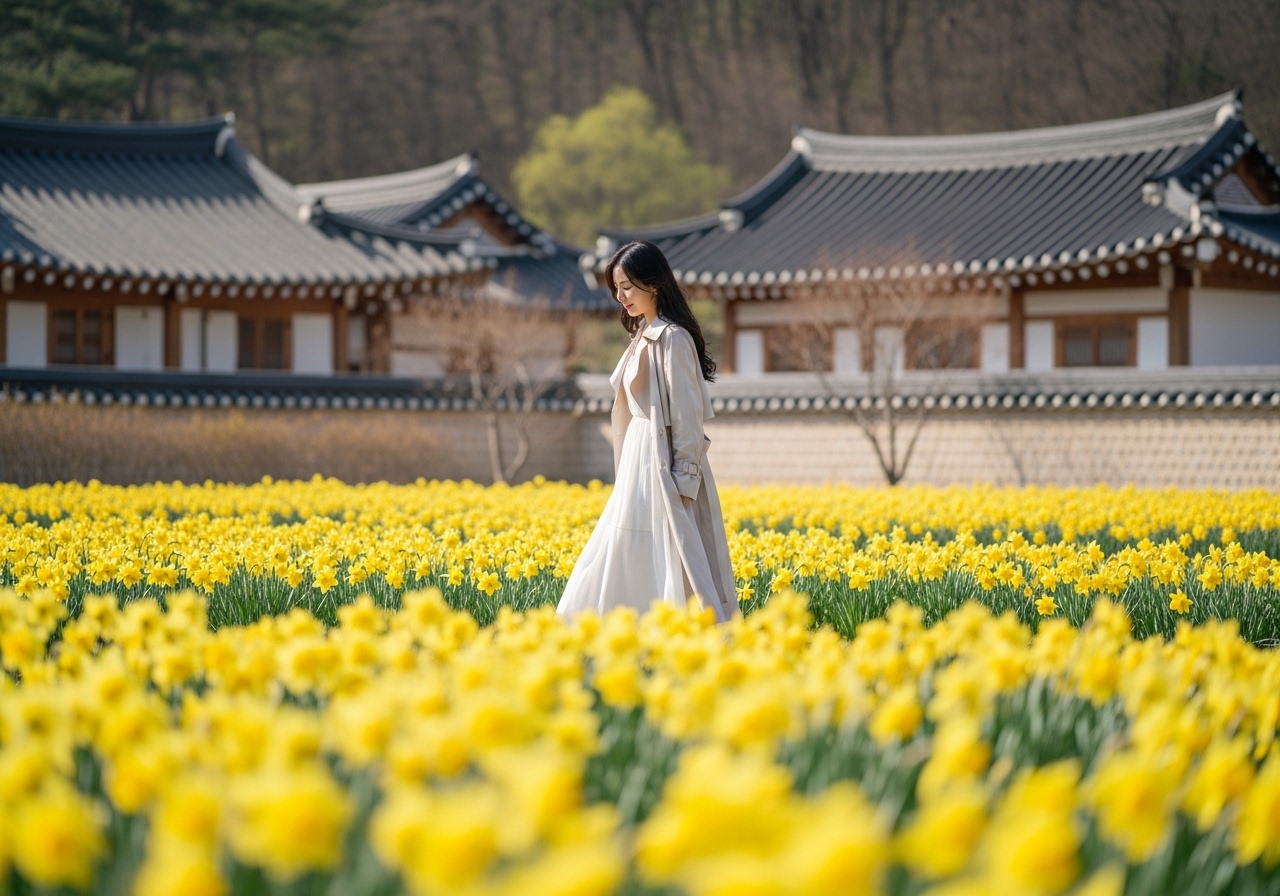
Every spring, the hillside behind this 1919 hanok transforms into a sea of 3 million yellow daffodils stretching across 10,000 pyeong (about 33,000 square meters) of sloping terrain. The image of the old tiled roof emerging from a wave of yellow flowers is genuinely one of the most beautiful things I've seen in Korea. 💛
Fun fact for drama lovers: this house actually appeared in the hit K-drama "Mr. Sunshine" as the home of a court official. So if you're a K-drama fan, this is definitely a meaningful spot to visit!
② 2026 Daffodil Festival Information
- Festival Name: Yugibang Hanok House Daffodil Scenery Festival
- Dates: March 20 (Fri) ~ April 19 (Sun), 2026
- Hours: Daily 08:00~18:00
- Admission: Adults weekday 8,000 KRW / weekend & holidays 9,000 KRW
- Children & teens: weekday 7,000 KRW / weekend 8,000 KRW
- Under 36 months: Free
- Parking: Free (extra lots open during peak season)
- Address: 72-10 Imunangil, Unsan-myeon, Seosan-si, Chungcheongnam-do
- Pets: Welcome on leash (large dogs must wear muzzle)
③ Tips for the Best Experience
The daffodil peak is only about 10 days long — usually between late March and early April. Check their official Instagram for real-time blooming updates before booking your trip!
Weekends during peak season get absolutely packed, with traffic backing up on the narrow single-lane road leading to the house. If you can visit on a weekday, please do. If you must go on a weekend, arrive right when they open at 8:00 AM to beat the crowds.
For the best photos, wear white or pastel-colored clothing — the yellow flowers pop beautifully against light tones. Also wear comfortable shoes since the daffodils grow on a hillside terrain! 👟
④ Nearby Cafe
About 5 minutes from Yugibang is the charming Yeomi Gallery & Cafe, a beautifully designed space that feels like the perfect continuation of the hanok house vibe. It's one of Seosan's most Instagrammable spots and a lovely place to sit down with a coffee after the daffodil walk. ☕
3) Sinduri Coastal Sand Dunes — Korea's Hidden Desert by the Sea
① A Natural Monument You Probably Didn't Know Existed
Hand on heart — when I tell people there's a massive sand desert in Korea, right next to the West Sea, most of them don't believe me! 😄
Sinduri Coastal Sand Dunes in Taean is designated as Natural Monument No. 431, and it's the largest coastal sand dune system in Korea. The dunes stretch 3.4km in length and up to 1.3km in width, formed over thousands of years by the relentless West Sea winds piling up sand. The result is an otherworldly landscape that looks completely out of place in Korea — in the best possible way!
The dunes are also home to rare species including the gold-spotted pond frog and the leopard rock lizard, both of which are endangered in Korea. It's a beautiful reminder that this landscape isn't just scenic — it's genuinely precious from an ecological standpoint.
② Why March Is the Perfect Time
March is actually the ideal month to visit the dunes! Here's why: the vegetation on the dune surface hasn't grown back yet after winter, which means the sand ripple patterns created by the wind are perfectly visible. The dunes look their most dramatic and "desert-like" at this time of year.
Combine that with clear spring skies and the occasional sight of cattle roaming freely on the sand, and you've got a photography playground unlike anything else in Korea. Wide-angle shots from the midpoint viewing platform on the boardwalk trail are absolutely stunning! 📷
The 1.5km wooden boardwalk trail connects naturally to Sinduri Beach at the other end, so you can finish your dune walk with a breezy stroll along the spring sea.
③ Practical Info
- Address: 201-54 Sinduri Haebeon-gil, Wonbuk-myeon, Taean-gun, Chungcheongnam-do
- Hours: Daily 09:00~18:00
- Admission: Free / Parking: Free
- Boardwalk trail length: Approximately 1.5km
④ Nearby Cafe Recommendation
Near Sinduri Beach is the wonderfully quirky Country Road Coffee — a cafe built inside a converted old school building. The retro schoolyard atmosphere and outdoor garden make it one of the most unique cafes in the Taean area, and it's become a popular photo spot among younger travelers. Perfect for a coffee break after the dune walk! ☕


4) Kkotji Beach — Korea's Most Romantic West Sea Sunset
① The Legend of Halbawi and Halmawi
Every great sunset needs a great story, and Kkotji Beach has one of the best in Korea! 💕
Two iconic rock formations stand about 200 meters offshore from the beach — Halbawi (Grandfather Rock) and Halmawi (Grandmother Rock). According to local legend, the two rocks are a separated couple who gaze at each other across the water, waiting to be reunited. As the sun sets between them, casting the West Sea in shades of red and gold, the silhouette of the two rocks creates a scene that feels genuinely cinematic.
This sunset is one of the most photographed in all of Korea, and once you're standing on that beach watching it happen in real life, you'll understand completely why.
② Spring at Kkotji Beach
While summer brings huge crowds and lively beach activities, March at Kkotji Beach is a completely different experience — peaceful, wide-open, and deeply beautiful.
The 5km of white sandy beach feels almost limitless when it's not packed with summer visitors. Walking along the shore with a spring breeze in your face, watching the light change as the sun approaches the horizon... it's the kind of simple moment that somehow becomes a core memory. 🌅
Arrive about 30 minutes before sunset, find a good spot in front of the two rocks, and let the show begin. In mid-to-late March, sunset is around 6:30~6:40 PM.
After the sunset, the string of cozy cafes along the beachfront are perfect for warming up with a hot drink and watching the sky turn dark. Pure bliss! ✨
③ Practical Info
- Address: Around 400 Kkotjihaean-ro, Anmyeon-eup, Taean-gun, Chungcheongnam-do
- Hours: Open year-round
- Admission: Free / Public parking available
- March sunset time: Approximately 6:30~6:40 PM
④ Food & Dining Nearby
The area around Kkotji Beach has a great selection of seafood restaurants serving fresh haemultang (seafood stew), saengseon hoe (raw fish), and the local specialty daeha (large shrimp) and kkotge (flower crab). Spring is also a great time for saejoae (short-necked clam) shabu-shabu — one of the most popular dishes among Korean visitors to the Taean coast! 🦐
4. Food Guide — What to Eat in Chungnam in March
1) Spring Nakji (Octopus) — The #1 Must-Try
March is peak season for nakji (small octopus) along the West Sea coast, and Chungnam is one of the best places in Korea to eat it fresh!
Spring nakji is prized for its full, firm texture and the tiny eggs inside — a seasonal delicacy you simply cannot get any other time of year. Head to Samgilpo Port in Seosan for the best selection of nakji restaurants. You can enjoy it as nakji shabu-shabu (hot pot), nakji bokkeum (spicy stir-fry), or nakji gui (grilled). All three are incredible, but the shabu-shabu is particularly popular in spring! 🐙
2) Anmyeondo Fish Market
Located near Kkotji Beach, Anmyeondo Fish Market is the go-to spot for fresh-off-the-boat seafood at local prices. You can buy directly from the vendors and have it cooked right there, or take it back to your pension to cook yourself — a very popular option for overnight visitors.
3) Nonsan Strawberries
If your trip overlaps with the Nonsan Strawberry Festival (March 26~29, 2026), make the detour — it's worth it! Nonsan is famous for producing some of the sweetest strawberries in Korea, and the festival lets you pick your own directly from the fields. It's a fun addition to any Chungnam spring trip! 🍓
5. Practical Travel Tips
1) Getting There
From Seoul, take the Seohaean Expressway and exit at Seosan IC. The drive takes about 1 hour 40 minutes. From Seosan IC, it's about 20 minutes to Ganworam Temple and 30 minutes to Yugibang Hanok House.
For public transport from Seoul, intercity buses run regularly from Seoul Central City Bus Terminal (Gangnam) to Seosan Bus Terminal — roughly 1 hour 40 minutes to 2 hours. Note that some key spots like Sinduri Sand Dunes and Kkotji Beach are difficult to reach by public transport, so a rental car is strongly recommended.
2) Where to Stay
For the best experience, stay at one of the ocean-view pensions on Anmyeondo Island near Kkotji Beach. You'll be perfectly positioned to watch both sunset and sunrise, and the Anmyeondo Fish Market is right nearby for fresh seafood meals.
Budget travelers can find more affordable options at hotels in downtown Seosan, which is a good base for Day 1 of an overnight trip.
Peak season for this area is late March through early April. Weekend accommodations book up fast — aim to reserve at least 3 weeks in advance!
3) What to Wear
March weather in coastal Chungnam is cool — daytime highs around 10~15°C (50~59°F), dropping to about 5°C (41°F) in the mornings and evenings. The sea breeze makes it feel 2~3 degrees colder than inland areas.
Pack layers! A light windbreaker or thin down jacket is essential. For the daffodil photos, bring a white or cream-colored top for the best contrast against the yellow flowers. Comfortable walking shoes or sneakers are a must for the sand dunes. 👟
4) Useful Apps & Tips for Non-Korean Speakers
- Google Maps works well throughout the area for navigation
- Naver Maps (Korean app) sometimes has more accurate local info
- Papago or Google Translate is helpful for reading menus
- Most restaurants in Seosan and Taean don't have English menus, but pointing at photos on the menu works perfectly fine!
- Cash is still preferred at some smaller seafood stalls and local restaurants, so it's good to have some Korean Won on hand
6. FAQ
Q. Do I need to book Ganworam Temple in advance? A. No booking required! Ganworam is free to enter, but you must check the tide schedule before visiting. The Ganworam official website posts daily tide information — arrive during low tide (gan-jo) to walk out to the temple. Missing the tide window means you can only admire it from the shore.
Q. When exactly do the daffodils peak at Yugibang? A. The full bloom peak is typically between late March and early April — roughly a 10-day window. It changes slightly every year depending on temperatures, so check their official Instagram account closer to your visit date for real-time updates!
Q. Is the Sinduri Sand Dune suitable for kids? A. Absolutely! The wooden boardwalk trail is well-maintained and family-friendly. Kids love running around the sand, and the open space gives them plenty of room to explore. Just bring extra socks in case shoes get sandy! 🧦
Q. What time is sunset at Kkotji Beach in March? A. In mid-to-late March, sunset is around 6:30~6:40 PM. Arrive by 6:00 PM to get a good spot in front of the two rocks before it gets crowded with other sunset chasers!
Q. Is Chungnam suitable for solo travelers? A. 100% yes! The main spots are easy to navigate, parking is free everywhere, and the pace is relaxed and unhurried. Solo travelers who enjoy scenic drives, nature walks, and quiet coastal vibes will absolutely love it here. 🙌
Wrapping Up
Spring in Korea doesn't have to mean fighting crowds at famous cherry blossom spots. Chungnam's West Sea coast offers something rarer and more rewarding — a genuine sense of discovery, wide open natural spaces, and a spring atmosphere that feels personal rather than touristy.
From the floating temple at Ganworam to the golden daffodil waves at Yugibang, the surreal sand dunes at Sinduri, and the breathtaking sunset at Kkotji Beach — this is a spring journey that stays with you long after you've driven back home.
2026 is a special year for Chungnam. Don't miss it. 🌼